
MEMO: ONLF on a Collision Course with the Ethiopian Government
As the ONLF faces an uncertain future, its ability to navigate the changing political and geopolitical realities in Ethiopia will determine its survival and relevance. More below

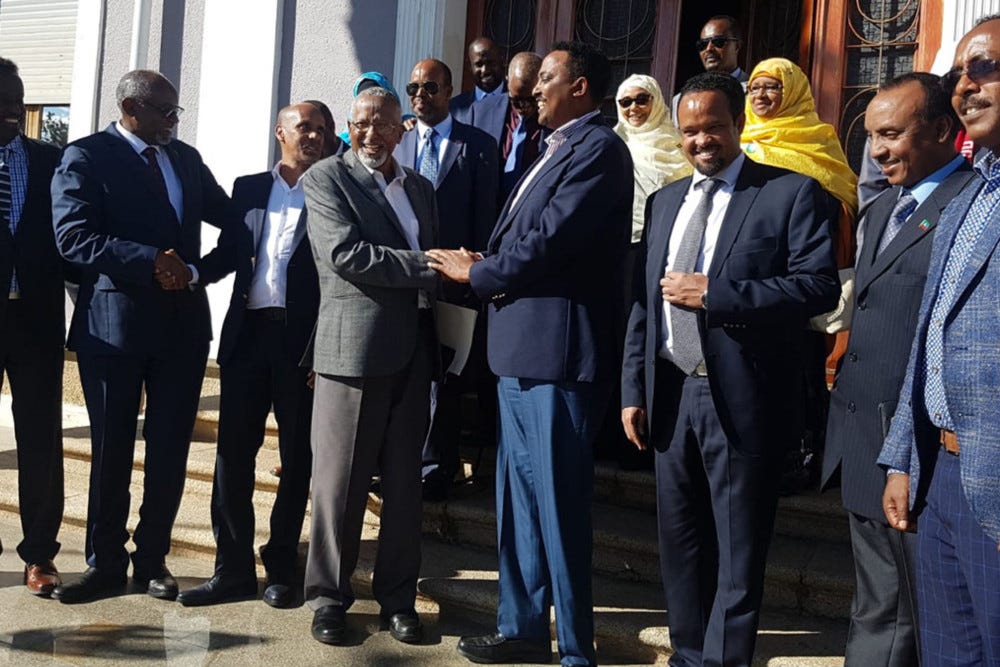
The Ogaden National Liberation Front (ONLF), one of the most notable armed rebel groups in Ethiopia, transitioned to a peaceful political path after the vague “2018 Asmara Peace Deal” with the Ethiopian government. ONLF fighters returned from exile in Eritrea, reportedly disarmed, and declared their intent to pursue peaceful politics to realize their aspiration for autonomy for the Ethiopian Somali people. However, after nearly 40 years of existence, the ONLF is struggling to maintain relevance within the Somali community and beyond.
The ONLF was established in 1984 with the goal of achieving independence for the Ethiopian Somali region (also known as Ogaden). In 1992, following the collapse of Ethiopia's military government, the ONLF participated in the country's first transitional government election. The group's acceptance in the Somali region alarmed the TPLF-dominated central government in Addis Ababa, leading to a crackdown on the group. By 1994, the ONLF launched an armed insurgency, initially from the Ogaden region and later from Eritrea. Throughout its history, the ONLF has sought external support from various foreign backers, including Eritrea, Qatar, and other international actors.
In 2007, the ONLF carried out a high-profile attack on a Chinese oil exploration facility in the Somali region, killing more than 74 people, including Chinese citizens. This event provoked a massive military crackdown by the Ethiopian government, significantly diminishing the ONLF's presence in the region. Consequently, the group's military wing retreated to Eritrea, despite Eritrea not bordering the Somali region of Ethiopia. For nearly a decade, the ONLF remained confined in Asmara with little to no significant military operations.
Emerging Internal Fractures
Following the 2018 Asmara peace deal, the ONLF faced internal challenges. A major faction of the group defected in 2022 to join Ethiopia’s ruling Prosperity Party, indicating a fracture within the organization. These internal divisions deepened in the wake of the recent Ethiopia-Somalia sea access dispute. As Ethiopia looks to secure strategic ports in Somaliland, internal disagreements have emerged within the ONLF. Some members oppose Ethiopia’s controversial plan to secure access to Somaliland ports, fearing it undermines Somali autonomy, while others prefer to remain neutral. Sources suggest that these internal differences are intensifying daily.
Rising Tensions with the Ethiopian Government
In recent months, the Ethiopian government has been increasing its military presence in the Somali region, mobilizing large contingents of forces and weaponry to the Eastern Command Division. This military buildup has caused concern within the ONLF. Tensions escalated further when Field Marshal Birhanu Jula, the chief of the Ethiopian military, made a controversial statement, accusing former and current rebel groups, including the ONLF, of being created to advance “Egyptian interests” in weakening Ethiopia. Ethiopia's strained relations with Egypt, particularly over the **Grand Ethiopian Renaissance Dam (GERD)**, have added weight to Birhanu’s remarks, framing the ONLF as part of a broader secessionist threat aligned with foreign adversaries.
The ONLF expressed strong dissatisfaction with Birhanu’s comments and formally requested clarification from the Ethiopian government. Last week, the ONLF issued another statement, opposing the federal government's militarization of the Somali region. The group claims that the government is undermining the Somali people's constitutional rights to “self-determination” and their aspirations for “self-rule”.
At the heart of this growing tension is the Ethiopia-Somalia sea access dispute, a crucial geopolitical issue that has further destabilized the ONLF internally. Ethiopia, being landlocked, has long sought strategic access to the sea, and the recent focus on securing a deal with Somaliland has become a contentious issue. Some elements within the ONLF oppose Ethiopia’s moves, while others remain indifferent. These internal divisions threaten the group's coherence and further erode its traditional support base within the Somali region.
Diminishing Relevance and the Threat of Crackdown
Since the 2018 peace deal, the ONLF has struggled to maintain its relevance, with defections and internal squabbles weakening the organization. The Ethiopian government seeks to ensure the ONLF's loyalty to the state, particularly as Ethiopia navigates multiple internal and external conflicts. However, the ONLF’s continued rhetoric about a “referendum for Somali self-determination” puts it at odds with the central government. The Ethiopian government, currently facing numerous adversaries, may eventually decide to crack down on the ONLF if tensions continue to escalate.
As the ONLF faces an uncertain future, its ability to navigate the changing political and geopolitical realities in Ethiopia will determine its survival and relevance.
Contact- wazemaradio@gmail.com